
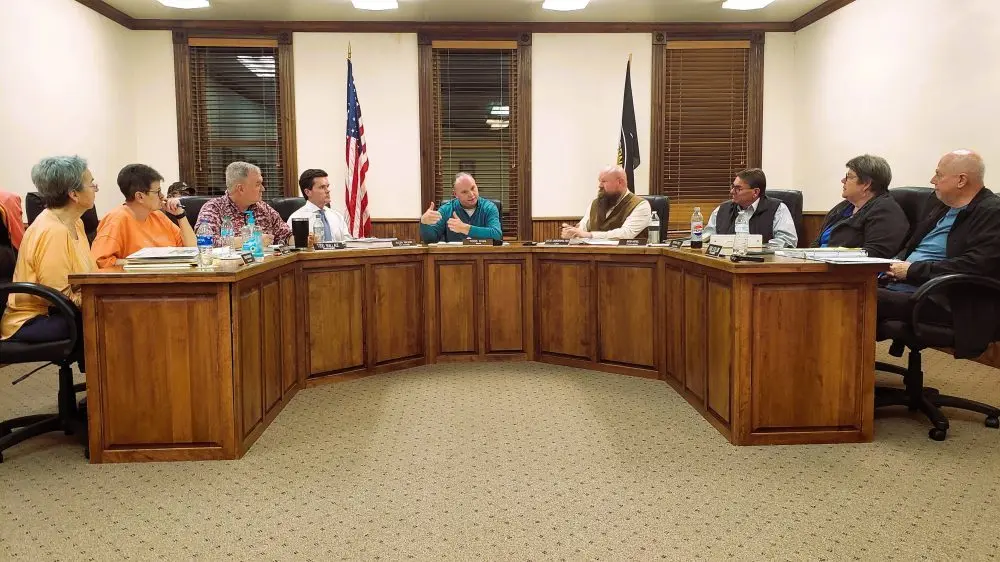
Cadiz City Council took its first steps to look at the 2026-27 fiscal year budget Monday night, when its newly-formed Finance Committee came together to discuss the future of immediate spending and perpetual savings in the community.
Those in attendance: Public Works Director Craig Oakley, City Administrative Officer Jack Lingenfelter, Mayor Todd King, Cadiz Police Chief Tyler Thomas, and council members Todd Wallace, Susie Hendricks and Craig Stallons.
Lingenfelter called the collaboration “a first” for Cadiz, at least in immediate recollection, as city department heads got a rare opportunity over the last few months to submit a summary of needs and wants ahead of these planning stages.
Furthermore, Lingenfelter said the City of Cadiz had a projected 2025 revenue of $4.26 million, but embraced $4.5 million in actualization. The projection for 2026-27, again preliminary, is $4.4 million.
One big change, Lingenfelter and the committee have agreed upon, is the shifting of most of the city’s general funds from Bank of Cadiz & Trust Company to FNB Bank.
Already some monies have been moved from one location to the other, and Lingenfelter confirmed the biggest reason is the difference in money marketing account interest rates.
At Bank of Cadiz it is currently .05%, and at FNB Bank it’s north of 2.25% — the difference between pennies, and hundreds, on the taxpayer dollar.
He and City Clerk Susan Hyde both confirmed that, in the future, key business would still be conducted at both banks.
Two projected annual expenses that also got major discussion were related to first response: the cost of training and duty ammunition for the Cadiz Police Department, and the growing strain on city and volunteer fire departments.
In no uncertain terms, Thomas confirmed bullets are expensive. Since he joined the department, case prices have increased more than 30%. Training ballistics are close to 60 cents a round, while duty ballistics are close to $1.60 per. Last year, he spent more than $6,100 for replenishment, and this has to be a consistent annual appropriation because duty ammunition legally has to be recycled every 2-to-3 years because of insurance and protection protocols. Thomas said he expects ammunition prices to continue skyrocketing.
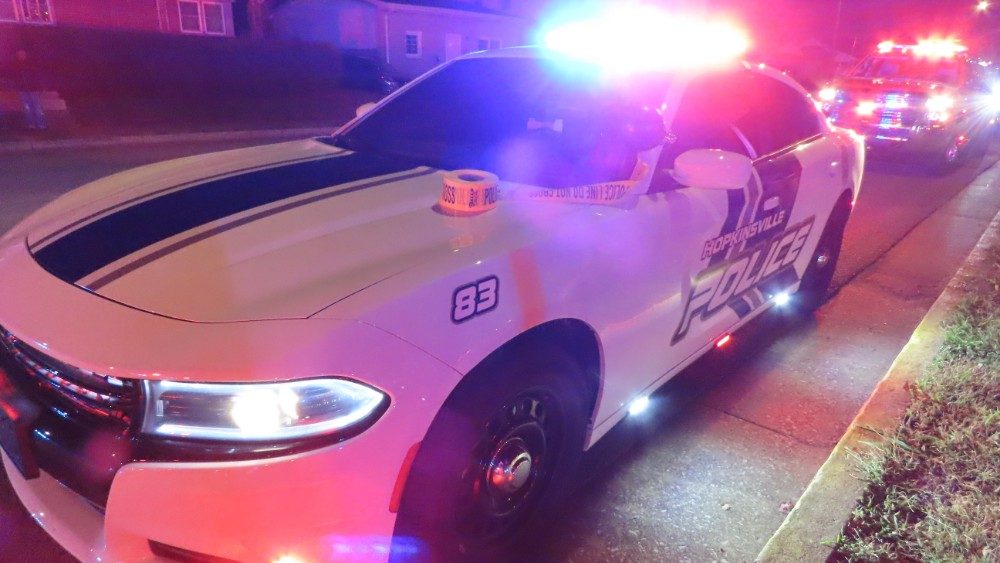
Meanwhile, Lingenfelter noted that prior to this week’s fire on Canton Road, city fire department payroll was “already above” $17,000 — with a budgeted line item of $17,450. A tentative budget of $18,500 has already been earmarked for 2026-27, but in the immediacy, there is concern.
Lingenfelter suggested that a singular community fire department would be easier for the city to fund, and easier for the entire force to collaborate and coalesce for state and federal grant appropriations. He said it would bring together not only sets of equipment, but life-saving vehicles into one location — all of which are needed for one of the state’s 25 largest counties.
FULL DISCUSSION:
Prior to the finance committee meeting, the full council gathered to:
+ Hear first reading of the new Trigg County Country Ham Festival Committee ordinance, which came with no changes after recommendations were met last week.
+ And to hear second reading of a new annexation for the City of Cadiz, thus approving the addition of a new Three Amigos Enterprises LLC property near KY 276/North Rocky Ridge Road and U.S. 68-80.
Zoned as B-2 and surveyed by Kyle Joiner of Pin Oak Engineering & Land Surveying, the property is roughly 15 acres.
According to city ordinance, B-2 is considered neighborhood and highway business district, which allows a wide range of commercial and service uses. Permitted developments include grocery stores, laundromats, restaurants, drug and hardware stores, markets, barber and beauty shops, shoe repair, motels, hotels, gas stations, theaters, car washes, public garages, dry cleaning services, printing and publishing operations, and other retail or service businesses.
Retail and wholesale businesses are allowed, including limited on-site production, as long as manufacturing is light, incidental to retail, employs no more than five people, and products are sold mainly on the premises.
Certain uses are prohibited, including animal hospitals, auto wrecking, junkyards, lumber or coal yards, dairies, welding operations, large fuel storage, mills, slaughterhouses, machine shops, and any operations that create hazardous, noisy, dusty, or offensive conditions, or pose fire or explosion risks.
Accessory buildings and uses related to permitted businesses are allowed.
Advertising signs are also regulated here. Signs must be set back 15 feet from the street, at least eight feet above ground, and only one sign per lot is allowed unless it solely identifies the business name and type.