
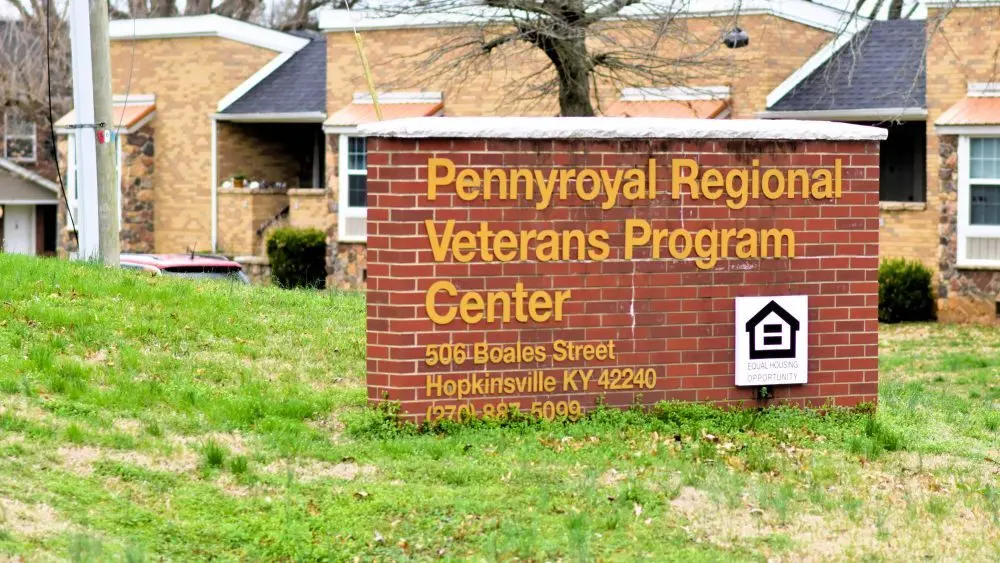
There on 506 Boales Street in Hopkinsville, the Pennyroyal Regional Veterans Center has spent the past 15 years answering the call from homeless soldiers nationwide — trying to put them on the right path after losing a healthy way.
Tim Herring, its long-time outreach coordinator, is himself a 20-year U.S. Army veteran turned civilian — one who admittedly remains in substance abuse recovery, and at any point after his discharge could have been one of the facility’s occupants, if not for some better choices.
He knows he can’t smoke a joint or drink a beer recreationally, and he regularly tells their admitted soldiers — many of them dealing with PTSD, mental health issues and substance issues all at once — the same thing.
Some days, Herring said, are more challenging than others.
According to Herring, and also PRVC Executive Director Jeff Broadbent, veteran homelessness doesn’t always come from systemic drug use, poor choices or even mental instability.
Sometimes, just the loss of a routine and purpose can be enough to put someone on the outs.
Such was the case for Mason, a man from Bowling Green who, after losing his wife, moved into a tent under a bridge, and would walk up to the Quick Mart to microwave some burritos.
Two weeks into a stint in Hopkinsville, Herring said Mason wasn’t immediately happy there either.
Another man, they said, barely knew American customs after his military tenure.
While there are the occasional cases of homelessness directly after a discharge, Herring and Broadbent said most of their cases come from men who have experienced a loss of housing over time.
Veterans arrive in Hopkinsville through a variety of referral resources, including local, regional and national VA’s, by self-referral, from police departments, through churches and community organizations and more.
Once a VA verifies eligibility and discharge status, Herring becomes the very first contact.
Since it’s not a nursing home, nor a medical facility, on-boarded residents must be able to care for themselves, function in a group living environment and have avoided past serious criminal offenses — especially those sexual in nature.
Veterans can stay up to two years, but that is very rare. The average stay, they said, is six months, and nearly 2,000 people have successfully been returned to civilian life through this program — many arriving with income, but in need of structure and guidance.
Herring said the straight and narrow is easy on their campus. Leaving it behind for a return to society, however, is a different story.
This facility is not a co-ed property, so Herring and Broadbent both confirmed that homeless women veterans are referred to Nashville.
Repeat customers, they added, can be a good thing for several reasons.
1) The veteran recognizes a pattern of slipping behavior, and returns before it’s too late.
2) It becomes a trusted location, one where a struggling soldier can regroup, refocus and get back to society.
And 3) the veteran is still alive, fighting, and there because of a choice made, since the facility isn’t mandatory.
Herring, however, said more can be done individually to avoid relapse, regression and burnt bridges.
Both he and Broadbent did note that other external supports of these veterans have room for address, including a growing need for affordable housing, expanded vouchers for case management costs and continued advocacy for mental healthcare.