
On one hand, the City of Cadiz and its leadership has spent more than 40 years kicking a rusty can down the road — never once bolstering itself with a sincere tax adjustment based on inflation or need, nor sincerely considering a requisite for reserve funds.
On the other, more than 25% of its residents now live at, or well below, the poverty line — fixed incomes, high rates of rent and fleeting business models plaguing ledgers and lives.
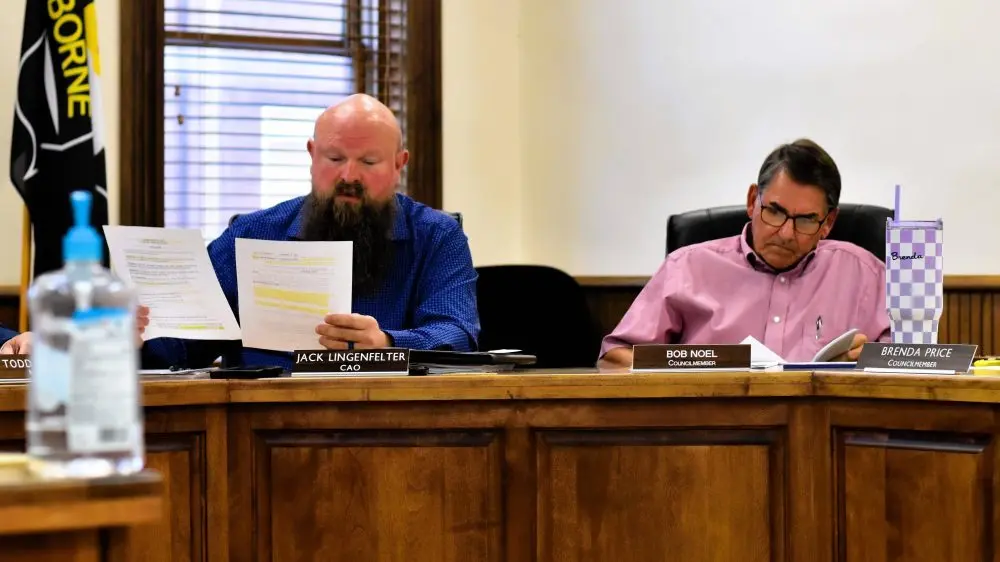
A rock met a hard place during Thursday night’s special-called Cadiz City Council meeting, when Mayor Todd King, City Administrative Officer Jack Lingenfelter and councilmen and women observed the first reading of the 2025-26 tax code, which if approved on second reading is:
+ 22.9 cents per $100 of real property assessments
+ And 43.2 cents per $100 of personal property assessments
King confirmed that he and other council members wanted to suggest raising city taxes above compensating rates around 2020-21, but instead opted to use COVID-19 and American Rescue Plan Act funds to offset local hardships.
Now, it’s even harder.
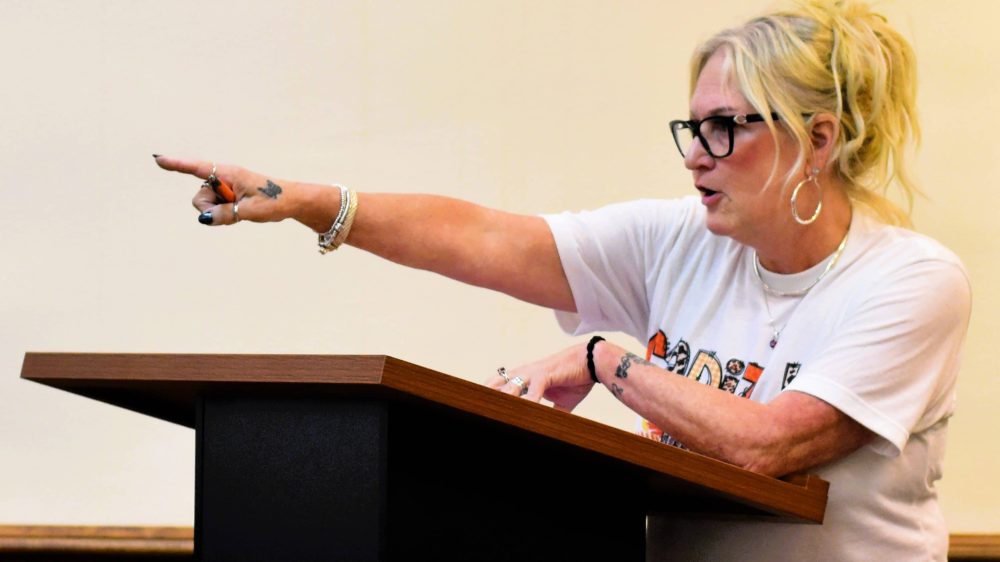
Owner of The Mason Jar and a Cadiz resident, Tammy Mason augmented her concerns on the fly — noting that she understood the city’s need to grow, be able to raise matching funds for grants and continue to provide key services to the community.
But another cost for the local taxpayer? That’s difficult.
Councilwoman Susie Hendricks said she, and other members, had “put this off for awhile,” nipping and tucking at costs and needs over the last half decade with patch jobs, used materials and essentially hand-me-downs, and that taking the compensating rate for 2025-26 was only going to net an extra $1,000 in revenue.
Lingenfelter noted that while the residents and businesses didn’t need to “shoulder the load,” the City of Cadiz hadn’t been given what is essentially a “cost-of-living-adjustment” since 1975. At that point, all city property was taxed at 27.8 cents per $100, and only since 2022 has personal property tax seen these dramatic increases from 21.8 cents to more than double — even through the state’s compensating rate.
Lingenfelter also confirmed that the City of Cadiz has applied for no less than $350,000 in grant funding just this week, and that there is a strong desire to create matching funds if they are awarded.
Currently, there are no matching funds of which to speak.
Meanwhile, councilwoman Susan Bryant urged that while the poverty line and those on fixed incomes, like herself, need to be considered — the city should stand for all concerns.
Second reading of both the tax ordinance, as well as a revamped and armed nuisance ordinance, will be at 6 PM Friday, September 26.
FULL AUDIO:
Notes from Lingenfelter:
+ The difference between the compensating rate of 20.4 cents and 4% (22.9) for 2025 is about $25 a year more for a $100,000 home, about $37.50 a year for a $150,000 home, and about $50 a year for a $200,000 home.
+ Taking the compensating rate keeps revenue flat, while costs for materials, wages and mandates rise. Furthermore, taking the compensating rate over a decade, he said, results in a 26% loss in buying power, leading to deferred maintenance, slow response times and the potential for service gaps and cuts.
+ Since 2005, inflation in Cadiz has been roughly 2.6% annually, but has averaged 4.25% annually since 2020.