
Since 1992, the Land Between the Lakes Woodlands Nature Station has welcomed thousands upon thousands through its doors — showcasing the flora and fauna not only of its neighboring Honker and Hematite lakes, but of west Kentucky and its natural habitats within.
The property, however, is in need of a critical update.
And, rest assured, it’s coming.
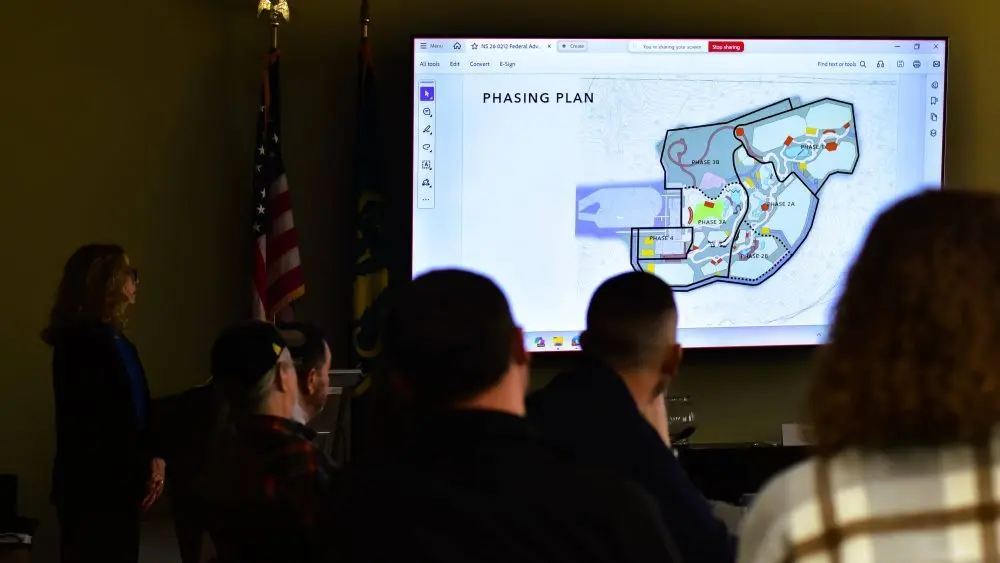
During Wednesday morning’s quarterly Land Between the Lakes Advisory Board meeting, Orlando’s Sally Coyle of Coyle & Caron, as well as trace’s Jenn Trompetter of Charlottesville, Virginia, unveiled a sprawling architectural, zoological, historical and anthropological three-phase remodel of the location.
Already a refuge and rehabilitation facility capable of housing the region’s rarest creatures, the goal, officials said, is to become the nation’s second-ever federally-owned property to become accredited by the Association of Zoos and Aquariums — behind only The National Zoo in Washington, D.C.
To say there is excitement about this project might unduly depreciate the seriousness, and the time taken, to secure what is now an official master plan.
Just ask John Pollpeter, long-time Nature Station director.
Jim McCoy, LBL’s area supervisor, said everything to this point has sprung from a “crazy idea” — a notion of simply offering a face lift, to this full-on creative endeavor.
Federal funding has been secured for “Phase 1,” which Coyle confirmed will begin with a refitting of the outer “Riverlands” ring of the property. This will include a new enclosure for the red wolves, a new enclosure for the addition of black bear, a crop of river cane, and full acknowledgment of a nearby unmarked African American burial ground — created around the time Center Furnace was operating between the rivers more than 150 years ago.
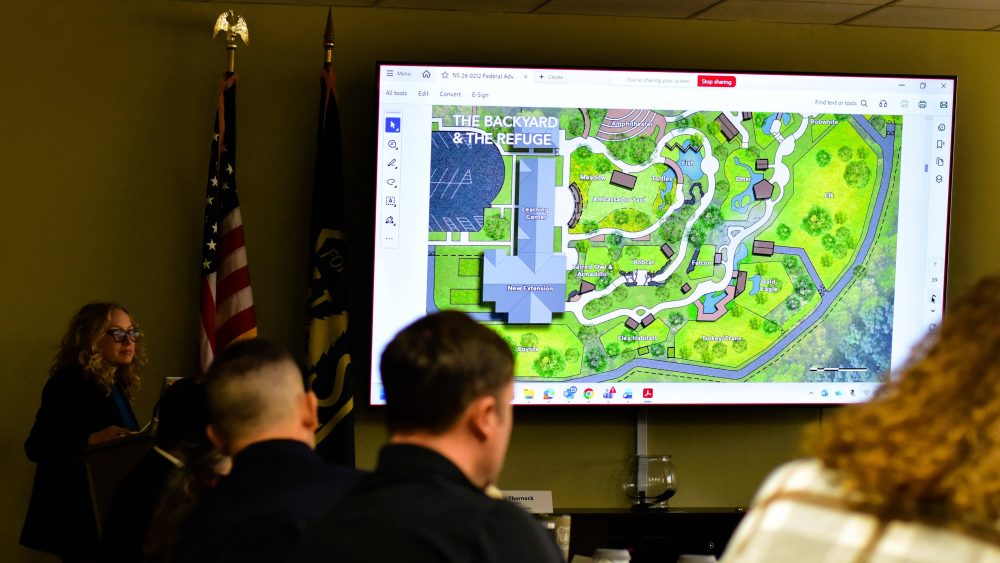
“Phase 2,” known as “The Refuge,” will include a new aviary for turkeys, falcons, quails, crane, eagles and owls, as well as a new river otter pad, a new grassland for older elk, and a home for bobcats.
“Phase 3” and “Phase 4,” she added, will involve “The Backyard” and “The Learning Center” expansion, as well as further walking trail development. This will include the addition of a conference space, a new “mouse house,” more restrooms, a wraparound observation deck, as well as some lower-level storage and the creation of an concession stand.
Current limited ADA compliance, as well as the few options for kid-friendly sensory-suppressed spaces, are also expected to be addressed, as are the lack of access points for staff to complete maintenance and husbandry tasks around the campus.
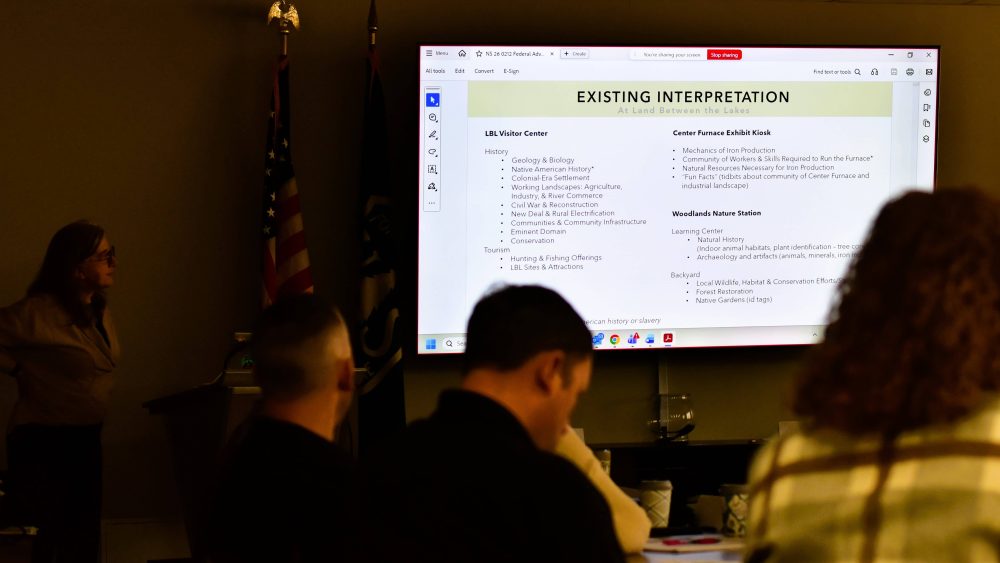
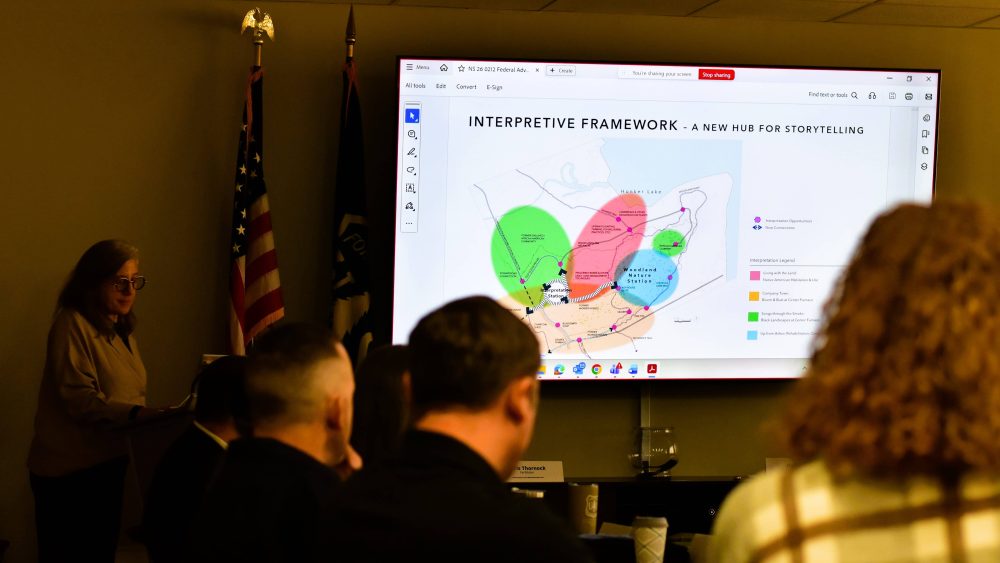
Truthfully, these details really only scratch the surface. Coyle and Trompetter also noted that noted LBL stakeholders, Department of Forestry officials, as well as former Between the Rivers residents and their ancestors, have been on hand to discuss this land’s rich history — positive and negative — and as such, four themes will be taken into account, and implemented, during this transition.
+ Living with the Land: Native American Habitation & Use
+ Company Town: The Boom & Bust at Center Furnace
+ Songs through the Smoke: Black People & Landscapes at Center Furnace
+ Rise From Ashes: Environmental Rehabilitation, Conservation & Controversies
Coyle noted there is “no timetable” on this remodel, but that a printed master plan will be ready by the end of February.
Coyle & Caron: Coyle & Caron, Inc.
trace: Trace
FULL PRESENTATION:
In other LBL news:
+ According to Jordan Crain, US Forest representative, a new road for the Golden Pond Overlook should be completed by the end of July. He and McCoy confirmed that Trigg County Judge-Executive Stan Humphries “played a large role” in progression for the project, which does remain in a design stage. What is now a quarter-mile hike to the location will eventually be a 10-yard walk from a constructed road. Funds have already been secured, and a NEPA analysis is underway.
+ According to Andy Mowery, LBL area planner, APHIS officials are currently amid a “successful” feral hog trapping and hunt. Using gunship and infrared targeting, nearly 1,200 have been eliminated, and the unit will return in two weeks following an early-spring thaw for cleanup. McCoy also confirmed that officials have “killed the heck out of them,” but that it’s impossible to determine a percentage of population remaining. Answering Trigg County’s Mark Turner, McCoy also noted that hunting hogs with dogs “has not been discussed,” nor is on the table.
+ Special Projects Manager John Westbrook said last year’s Lidar data of LBL has been secured, in collaboration with the Murray Independent School District, Murray State University, Austin Peay State University, Kentucky State and other stakeholders, and that they are in the middle of transitioning to Phase III. That will include a major discussion on “what to do” with the unique points.
+ In terms of land restoration, Mowery noted that land restoration efforts continue to be successful. Loblolly pine is still “everywhere” and remains a non-native invasive species, as do privet and kudzu, and that National Deer Association is assisting with control measures.
+ Yvonne Antes, silviculturist, said 27 of the 64 planted American chestnuts remain from last year’s planting, which comes “well above expectations” of survival. She believes this will create a “valuable crop of seeds” in order to continue its reintroduction to LBL.
+ Crain confirmed that more than $7 million in ERFO funds have either arrived, or been awarded, for necessary single-point repairs to a number of roads across the reserve. Most of the damage, he said, came from May and further summer flooding last year, and that fixes are coming for 134 (Energy Lake Road), 169, 174, 302, 321, 165, 110, 112, 113, 127, and at least 20 other roads.
As for Energy Lake Road, he said a betterment was filed to increase its culvert size, and the “hope” is to have it open to the public by the end of July.
+ Emily Cleaver, LBL public affairs specialist, affirmed the area website, landbetweenthelakes.us, is in the middle of a massive overhaul and nearly complete. Efforts were turned toward improved program planning, a better user interface, new calendar options, additional informational pages, better search engine optimization, and better connectivity as a local and regional web portal to places like Murray, Clarksville and Cadiz.
+ Chris Thornock, LBL heritage program director, said conversations with Mark Turner and the Trigg County Historical Society led to the re-installation of a Cunningham home site sign, which was originally pulled up through some confusion. Thornock said the use of cemetery heritage funds, combined with communication, would help meet “quality with standardization,” and that there is a strong desire for all LBL ancestors to mark home sites all across the 180,000-plus acres.