
James William Hendricks still remembers where he was the fall of 1945, and the official end of World War II.
About to turn 18 that late September, he was going back and forth often between Cadiz and Hopkinsville, chopping stove wood for his grandpappy in preparations for a typical frigid west Kentucky winter.
That December, however, Hendricks was drafted through the Selective Service System — a practice that didn’t end until 1973 — and for two years served in the U.S. Army at stations like Fort Atterbury, Indiana, for intake, Fort McClellan, Alabama, for basic, and Camp Stoneman, California, for assignment, before he was ordered to finish out his term working in a military hospital.
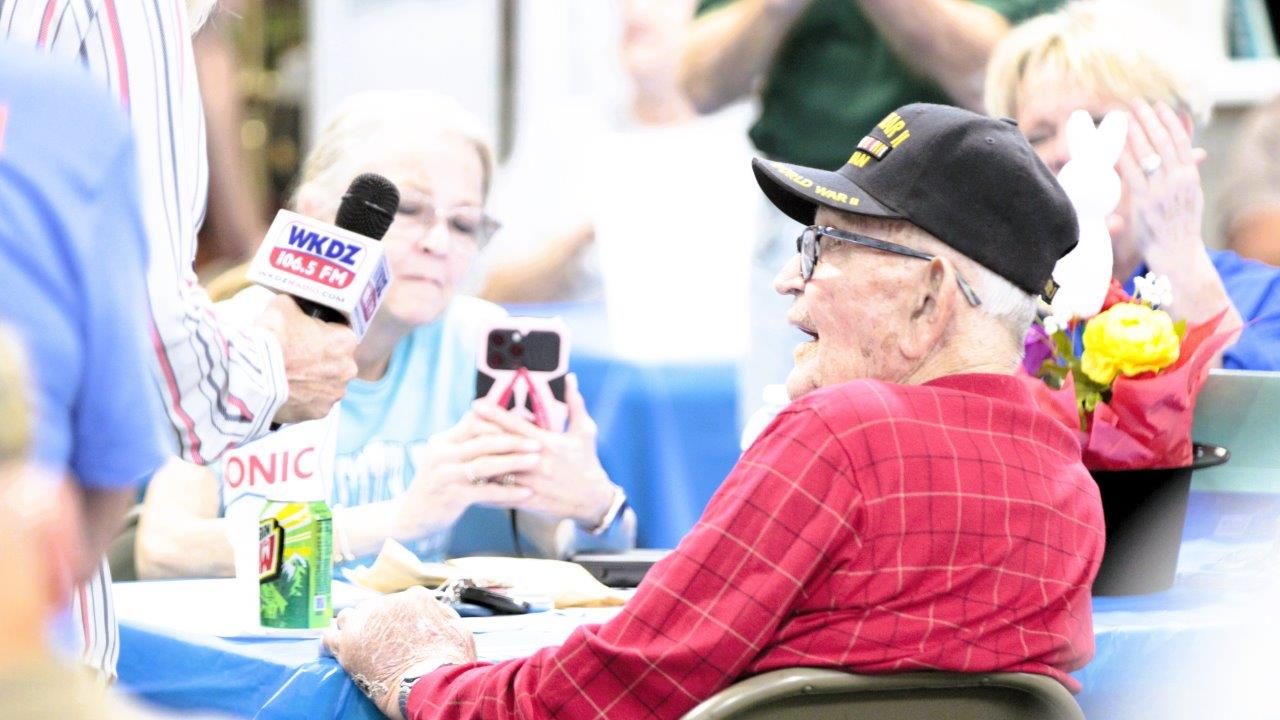
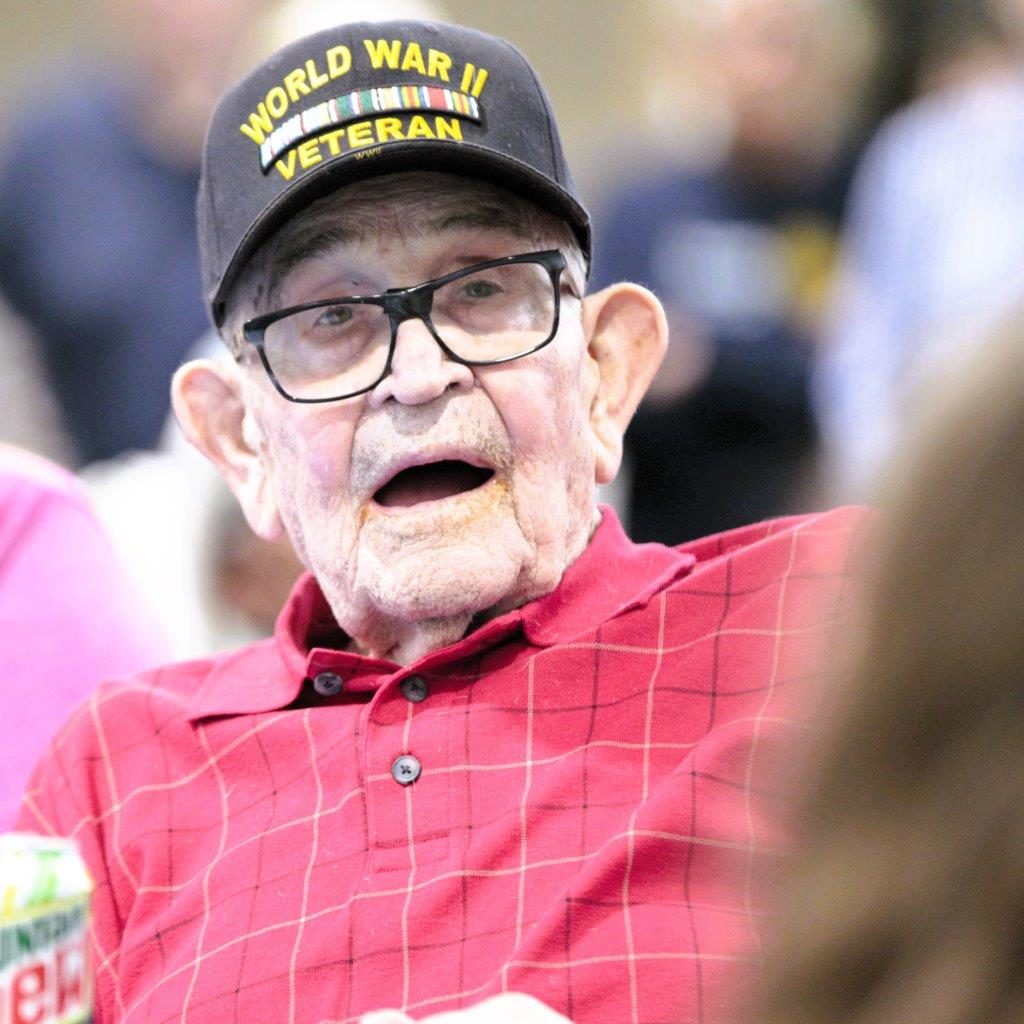
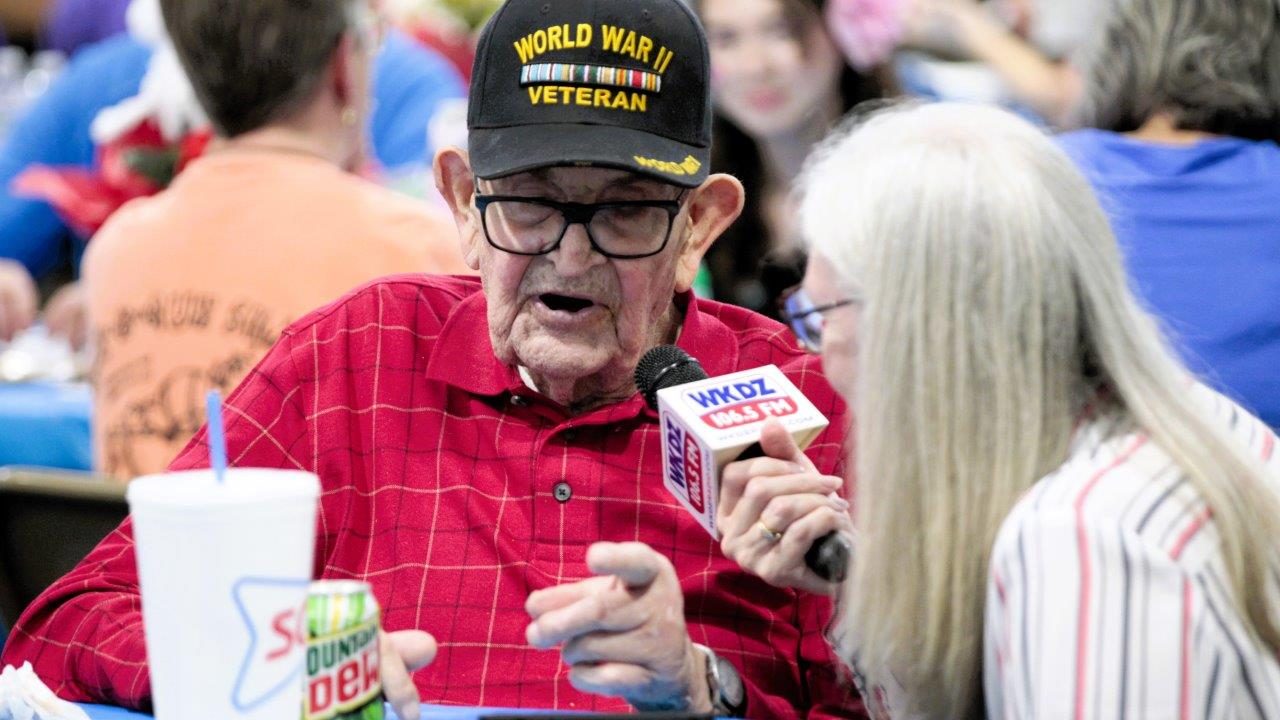
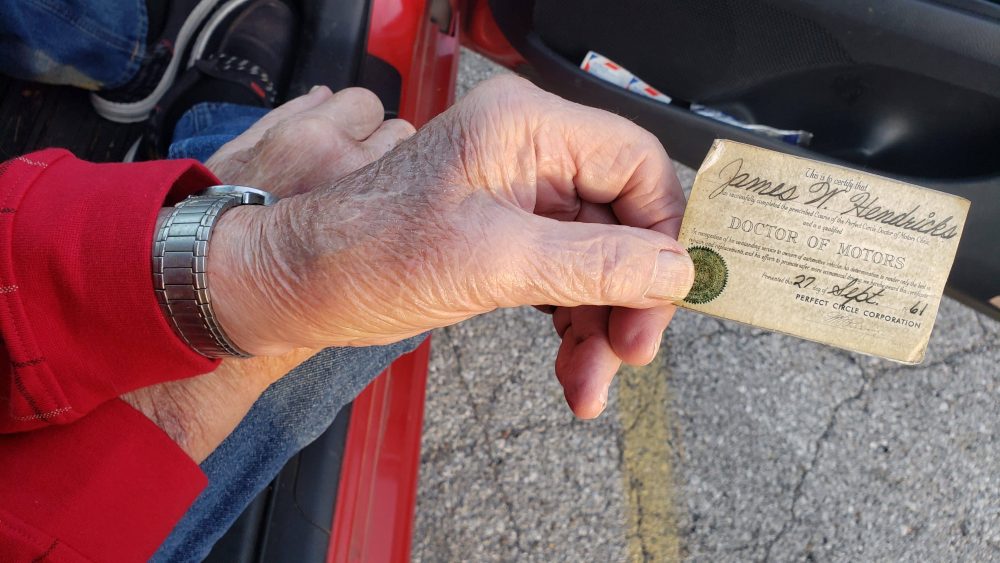
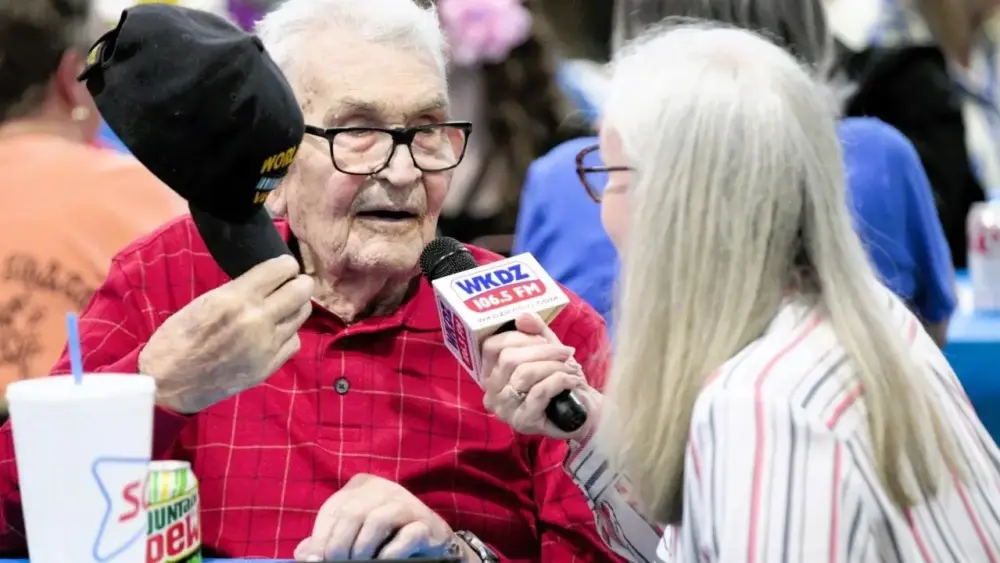
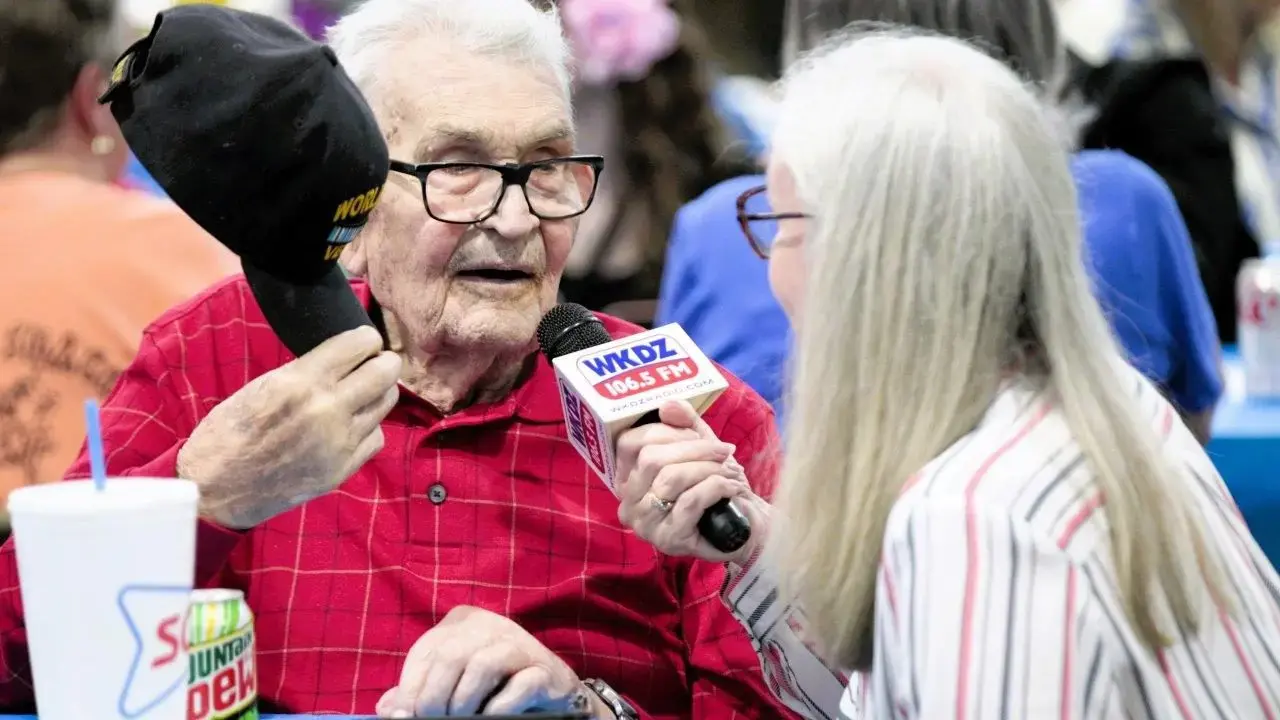
Wednesday night in the Baptist Annex — the spry 98-year-old, sitting across from his daughter and in a place he for more than a decade once called work as a mechanic — simply smiled and regaled for all to hear, as part of focused festivities at the 59th Annual Cadiz Rotary Radio Auction.
Taking questions from Rotarian and Edge Media Group President Beth Mann, Hendricks served, and remains, as a lasting vestige to the “Greatest Generation,” a group of men and women internationally who turned to duty, service and honor during the world’s greatest conflict.
As an MOS 745 Rifleman, Hendricks said his first military breakfast remains unforgettable.
Hendricks said that when he signed up in the Army, his recruiter guaranteed him six months in the states before likely being shipped overseas as a replacement unit for post-war operations.
Just before basic training, and on one of his three-day leaves, Katherine Thomas — unconventionally for the time — asked for his hand in marriage, and they wed June 11, 1946.
A month later, he was on the West Coast — a strange place for a man who had never been more than 20 minutes away from home.
Hendricks said he was supposed to join the aftershocks of the Pacific Theater, but God had other plans.
Because he had fewer than 18 months remaining on his military contract, Hendricks said he was instead assigned to domestic efforts — receiving the sick and wounded here.
He called the job “a perfect fit,” but that everything felt like “a madhouse.”
One of 10 brothers and sisters, Hendricks said he doesn’t know how much time he’s got left, as only one brother remains.
Hendricks and his words proved to be a major auction catalyst, as a $100,000 match and call to action from the Cadiz Rotary Club was emotionally met by the public for the Trigg County Veterans Memorial and its vision as a growing monument to the community’s deep roots in American military history.
Fittingly, the memorial committee’s next step is an homage to World War II, and Trigg County’s part in it.
Hendricks is forever a chapter in the story.