
For many of the graduates recognized Thursday evening at ’s Hopkinsville and Fort Campbell Regional Campuses, the road to a college degree did not follow a straight line.
Some were parents raising children while attending online classes after work. Others were military-connected students, working adults or first-generation college students returning to school years after putting their education on hold. Several began at Hopkinsville Community College before transferring to Murray State to finish bachelor’s degrees close to home.
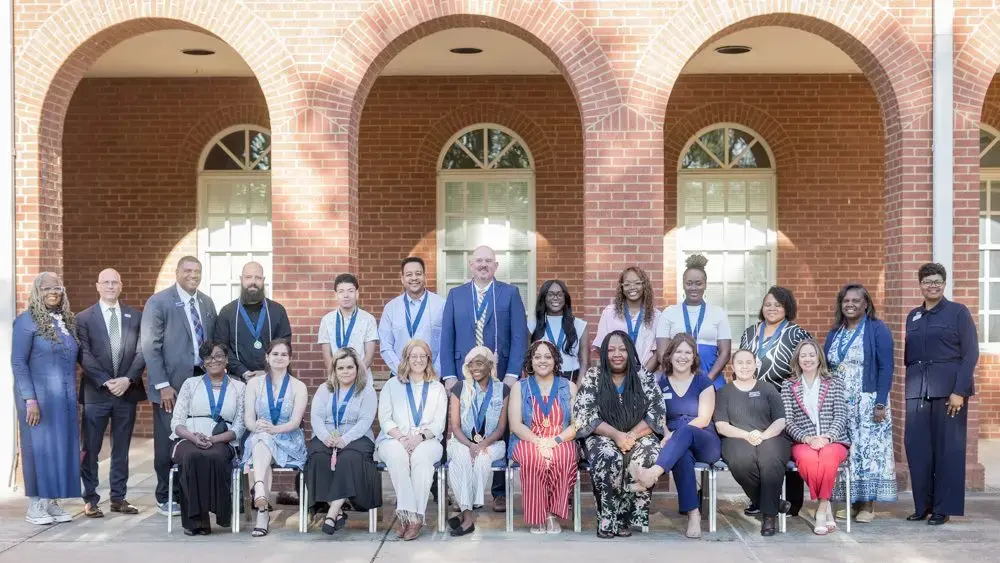
Thursday’s regional graduation recognition ceremony in Hopkinsville celebrated those students — many of whom university leaders say represent a growing segment of higher education nationwide: adult and nontraditional learners pursuing flexible, affordable pathways to degrees.
“Today’s graduation was a recognition of Hopkinsville and Fort Campbell’s fall 2025, spring of 2026, and summer 2026 graduates, mostly non-traditional students who earned anything ranging from an associate’s degree all the way up through a master’s degree or graduate certificate,” said Shannon Slate, director of the regional campuses.
Slate said more than 70 students graduated from the campuses during the academic year, with 20 participating in Thursday’s in-person ceremony ahead of Murray State’s university-wide commencement ceremonies this weekend in Murray.
The ceremony marked the first year Murray State hosted what Slate described as a celebration of “homegrown graduates” — students who completed portions of their education locally through partnerships with Hopkinsville Community College and regional campus programming.
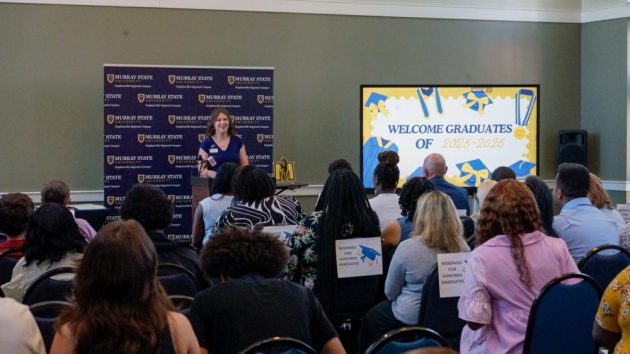
“So what we like to call homegrown graduates and so this was our first year doing that and we’re very proud to recognize those students because our partnership with Hopkinsville Community College allows higher education to be accessible and affordable here in Hopkinsville,” Slate said.
The event follows broader national trends in higher education, where colleges increasingly are trying to reach adults who previously stopped going to school or delayed earning degrees because of work, finances or family obligations.
According to the National Student Clearinghouse Research Center, returning adult learners now make up the largest share of transfer students nationwide. The organization reported in 2025 that 52% of transfer students were learners returning after previously stopping out of college.

Researchers and education leaders say flexibility and proximity have become priorities for adult learners, especially in rural communities where access to universities may require long commutes or relocation.
A 2024 study published in Innovative Higher Education found adult students often face barriers involving “distance, time, and relationships to others” when deciding whether to return to school.
Kentucky education officials have also acknowledged the challenge. The Kentucky Council on Postsecondary Education reported that more than 557,000 Kentuckians have some college credit but no degree, and state leaders have identified adult re-enrollment as essential to improving workforce participation and educational attainment.
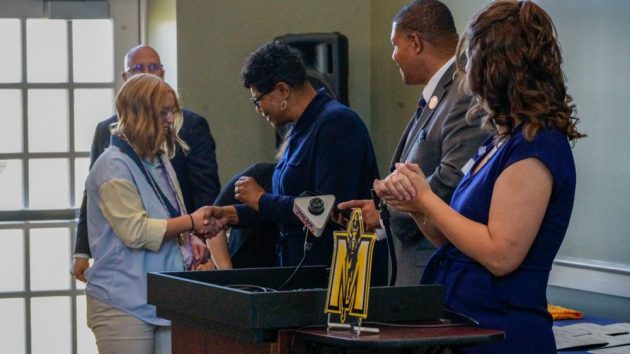
For graduate Madison Joiner , the regional campus model provided a way to continue her education while balancing work and motherhood.
“I actually started for elementary education probably back in 21,” Joiner said. “Then I got married and had a kid and had to take a break.”
Joiner said conversations with Slate helped her return through Murray State’s Integrated Studies program while continuing to work in the school system.
“It was really nice because I only live five minutes away and so it was nice to be able just to commute here and not having to go all the way to Murray while being a mom and a full-time working mom,” she said.
Joiner now plans to pursue Kentucky’s Option 6 alternative teacher certification route through Christian County Public Schools.
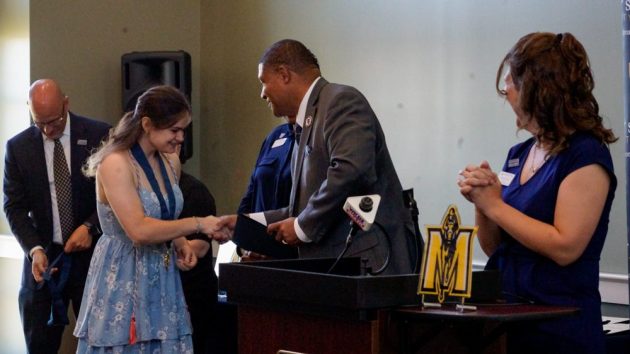
Graduate Kaitlyn Soliz followed another increasingly common pathway: community college to online bachelor’s completion.
“I did get my associates at the Hopkinsville Community College and then I ended up being an online student to get my bachelors at Murray,” Soliz said.
Soliz, who works as an admissions specialist at Hopkinsville Community College, said having local support while completing online coursework was key to her success.
“It was very nice as far as getting started and stuff and figuring out how to go about doing things,” she said. “I had somebody locally I can talk to to be able to get things figured out and what classes to take and it was very helpful.”
Community college transfer partnerships have become increasingly important nationally as universities seek more affordable degree pathways for students.
The Kentucky Community and Technical College System reported in 2024 that more than 13,000 students transferred from Kentucky community colleges to four-year universities, noting that community college pathways often reduce the overall cost of earning a bachelor’s degree by more than half.
Leaders at both institutions said Thursday’s ceremony demonstrated years of collaboration between Murray State and Hopkinsville Community College.
Dr. Alissa Young, president of Hopkinsville Community College, called the event “true partnership in action.”
“I’m just grateful for the partnership with Murray State University so that citizens in our community can stay right here at home and complete their dreams, their goals, their educational goals,” Young said.
Murray State University President, Dr. Ron Patterson, said the regional campus graduates represent an important part of the university’s future.
“We’re excited to be here and support the Hopkinsville Regional Campus graduates,” Patterson said. “This is my first class and so it has sentimental value but at the same time it’s a tremendous community.”
The focus on local access mirrors efforts across the country to remove barriers for adult learners through transfer agreements, flexible scheduling, online coursework and regional campuses.
A report by education policy organization New America found colleges are increasingly relying on personalized advising, flexible course structures and targeted outreach to help adult learners return and complete degrees.
Slate said the Hopkinsville and Fort Campbell campuses are continuing those efforts with open enrollment for summer and fall semesters already underway.
“We are openly enrolling for the summer and fall semesters right now and so it’s never too late to go back to school and we would love for you to come see us,” Slate said. “We have transfer scholarships and ways to make higher education affordable and your degree is closer than you think.”